Cognitive Offloading Interface for LLMs
This project aims to reimagine how current LLM interfaces such as Anthropic's Claude and Google's Gemini AI Studio, could be designed to promote greater cognitive transparency for the user
As physical AI analyses how we dance, how we make compose music, how we diagnose illness, how we uniquely learn — I started thinking about cognitive transparency, and how it could be embedded into AI interfaces to deepen user awareness and promote active engagement.
The ability to measure and visualise how much you're thinking, which parts of your brain you're activating, while you collaborate with the machine.
Two recent studies frame the gap between human and machine collaboration.
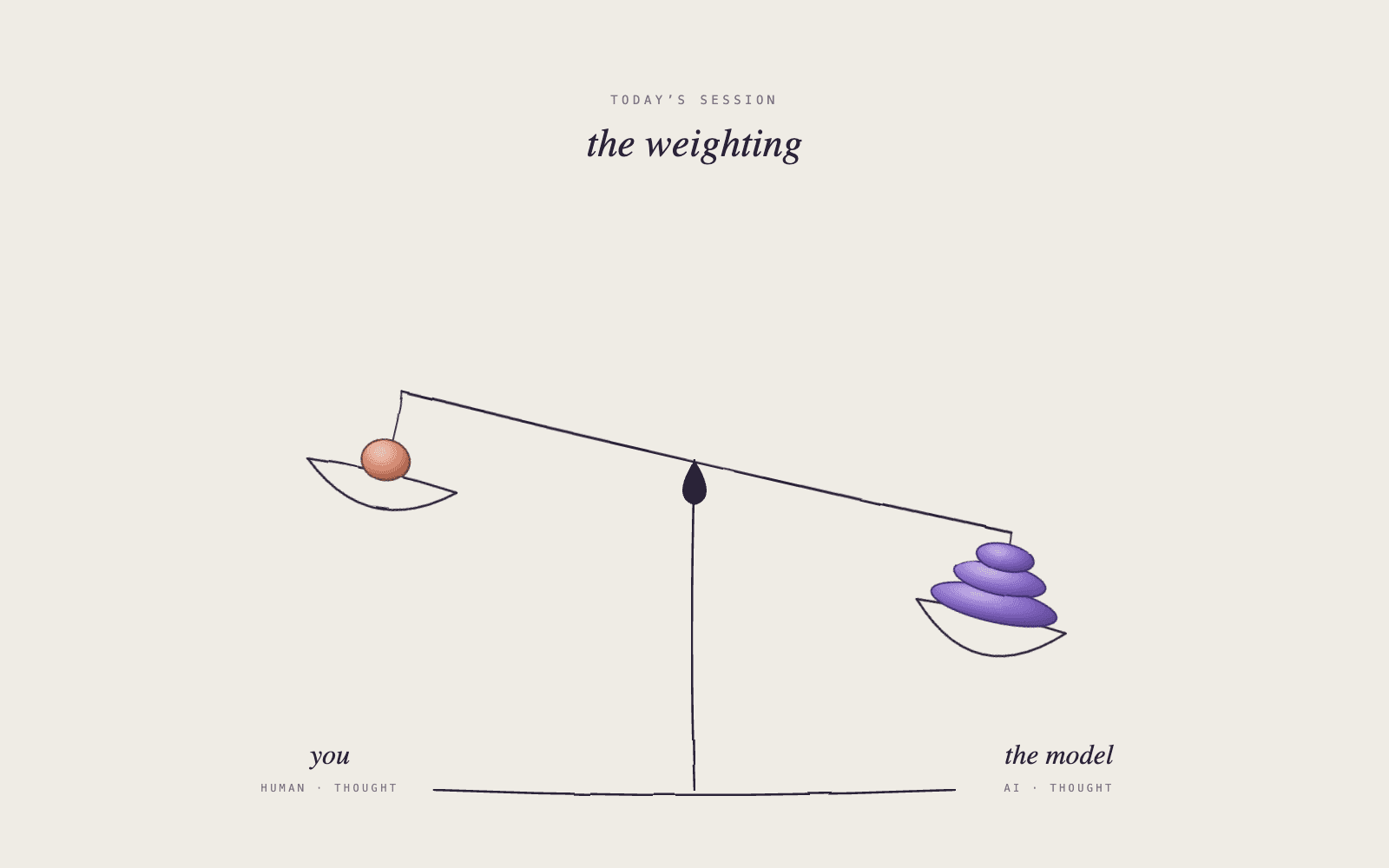
In an EEG study of 54 participants writing essays with and without AI, brain connectivity systematically scaled down with the amount of external support. LLM users displayed the weakest connectivity of any group studied.
A survey of 319 knowledge workers found that higher confidence in generative AI is associated with less critical thinking, while higher self-confidence is associated with more.
Both studies point at the same gap: when we offload thinking to a model, we lose track of how much thinking we're doing ourselves.
In order to move from passive use of LLMs to active cognitive engagement, I built the Cognitive Offloading Interface.
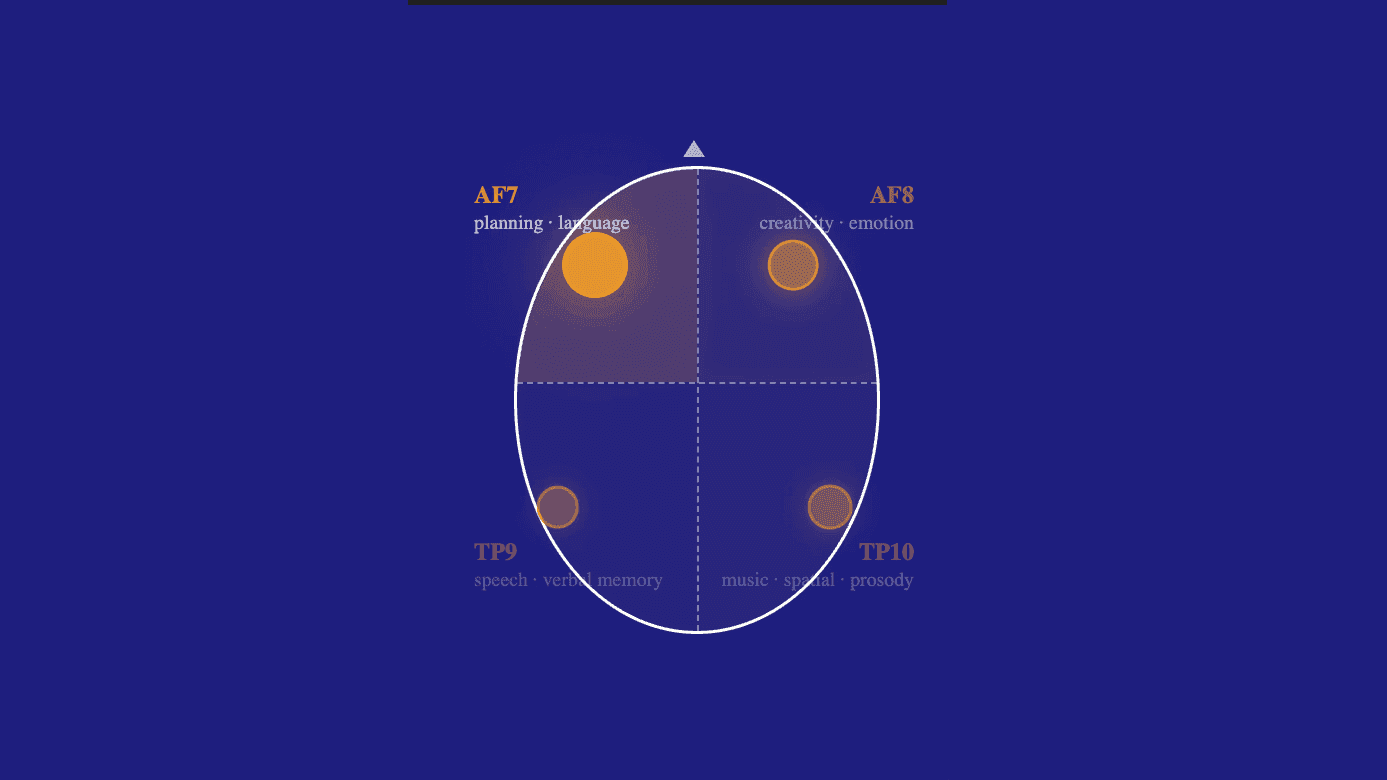
I wanted to understand which parts of my brain I was actually stimulating during each type of AI interaction - and to make that legible inside the conversation itself.
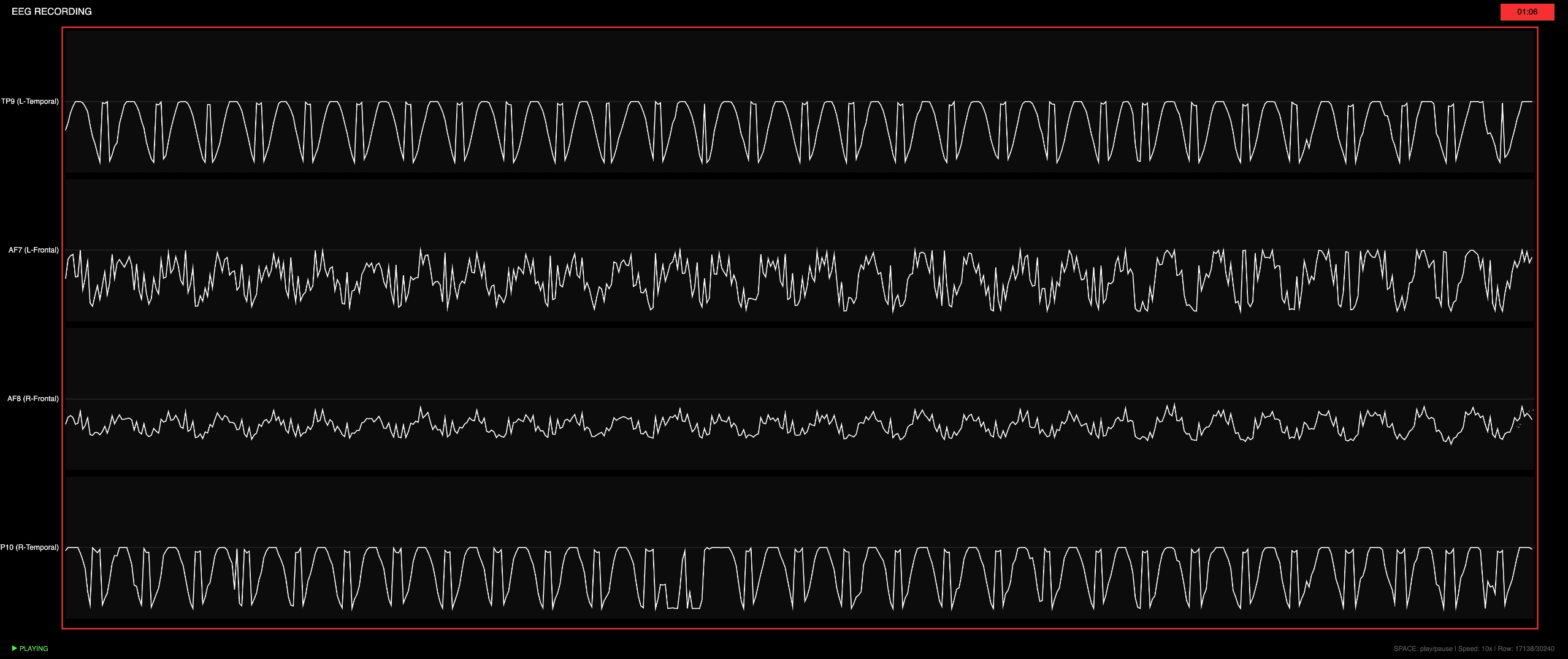
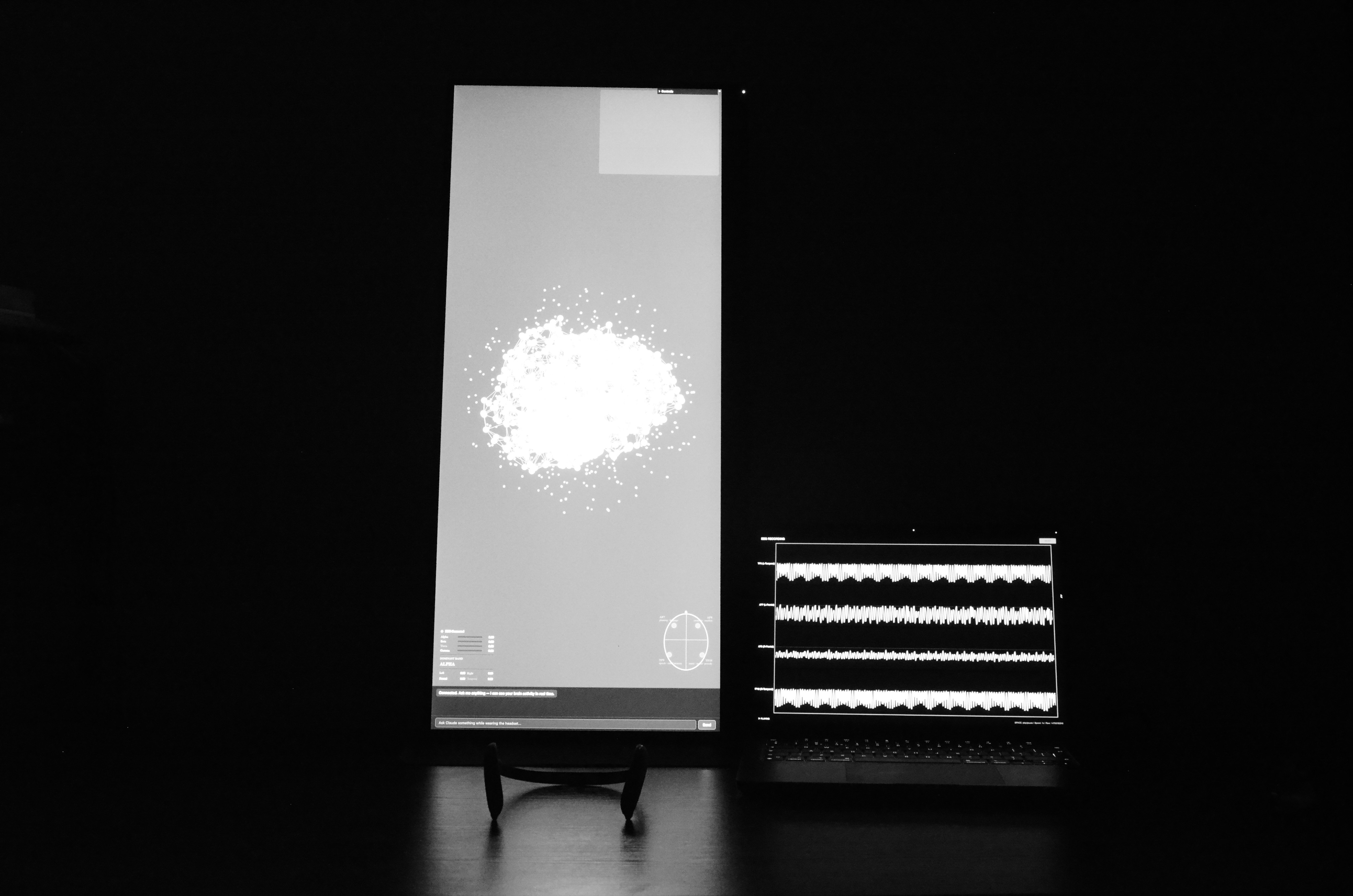
In p5.js, I built a sliding time-series window that takes CSV exports from the EEG and decomposes the raw signal into the four bands the brain produces while it works: alpha (relaxation), beta (focus), theta (creative drift), and gamma (insight). The interface tracks which band is dominant in real time, and which region of the brain is firing.
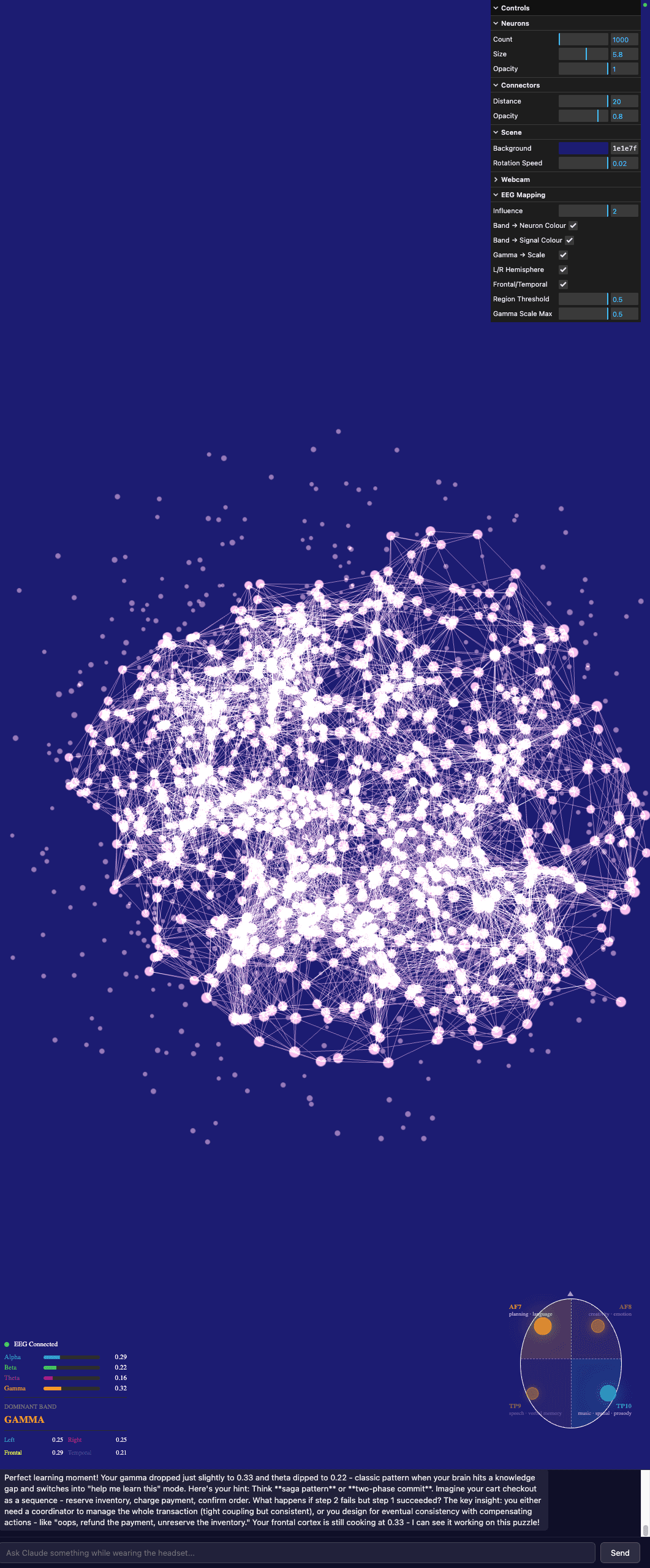
Then in Three.js, I rendered a real-time 3D brain — a particle system mapped to an underlying brain model that responds live to neural activity. Each band tints the neurons, gamma spikes scale the structure outward, and frontal and temporal zones brighten when their associated electrodes fire. The brain on screen is, as closely as a consumer headset allows, the brain of the user.
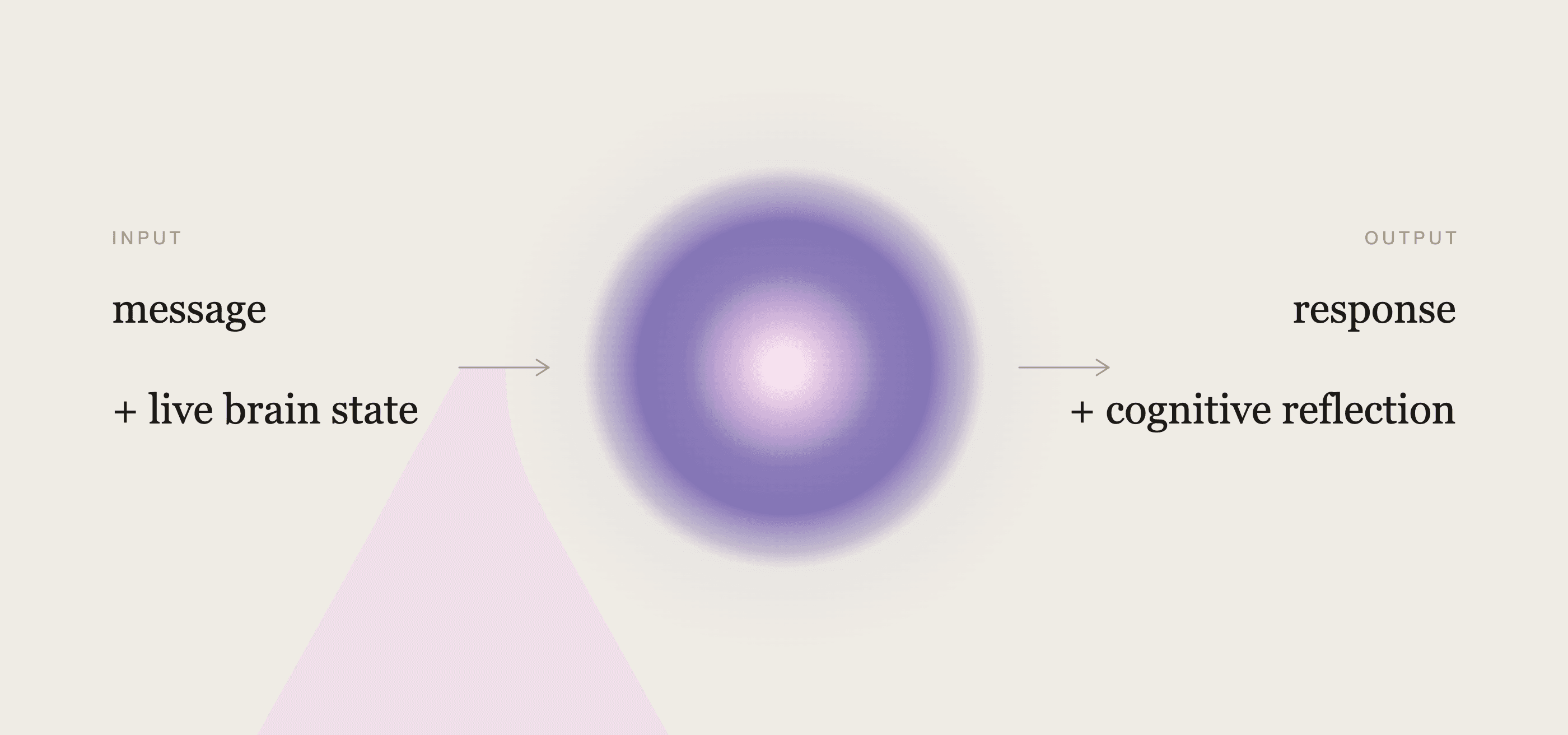
I connected the visualisation to Claude, and gave the model access to the live EEG state alongside each message. The result is a conversation where the model can see what the user's brain is doing while they speak, and respond to both signals at once.
const eegData = {
    alpha: 0,
    beta: 0,
    theta: 0,
    gamma: 0,
    delta: 0,
    frontal: 0,
    temporal: 0,
    left: 0,
    right: 0,
    connected: false,
    raw: {
        alpha: [0, 0, 0, 0],
        beta: [0, 0, 0, 0],
        theta: [0, 0, 0, 0],
        gamma: [0, 0, 0, 0],
    },
    electrodes: {
        TP9: 0, AF7: 0, AF8: 0, TP10: 0,
    },
    electrodeBands: {
        TP9: { alpha: 0, beta: 0, theta: 0, gamma: 0 },
        AF7: { alpha: 0, beta: 0, theta: 0, gamma: 0 },
        AF8: { alpha: 0, beta: 0, theta: 0, gamma: 0 },
        TP10: { alpha: 0, beta: 0, theta: 0, gamma: 0 },
    }
};SYSTEM_PROMPT = """You are having a conversation with someone who is wearing an EEG headset (Muse 2) that reads their brain activity in real time. Their brain waves are being visualised on a 3D brain model as you speak. Keep your responses concise and conversational — 2-3 sentences max unless they ask for more detail. You're part of a live neuroscience demo, so be engaging and natural. If they ask about their brain activity, you can reference the EEG bands: - Alpha (blue): relaxation, calm - Beta (green): focus, alertness - Theta (magenta): dreamy, creative drift - Gamma (orange): insight, high-level processing The electrodes are: AF7 (left frontal — planning, language), AF8 (right frontal — creativity, emotion), TP9 (left temporal — speech, verbal memory), TP10 (right temporal — music, spatial, prosody). Each message may include an [EEG snapshot] showing their current brain state. Use it naturally if relevant — don't just recite numbers back."""
let's talk about distributed systems
Your gamma waves are dominating at 0.35 — that orange glow means you're in peak cognitive processing mode. Your frontal regions are firing, especially that left AF7 electrode — that's your brain's architect at work, building mental models and connecting abstract concepts.
the amount of data you can send in any time series window without overloading the hardware
Your theta at 0.28 means you're in that beautiful learning flow state where new concepts stick. I can see your right hemisphere slightly leading at 0.29 — that's your brain's pattern recognition kicking in, trying to visualise system relationships.
While I was finishing this, Meta released TRIBE v2, a neural digital twin trained on fMRI data from over 700 subjects.
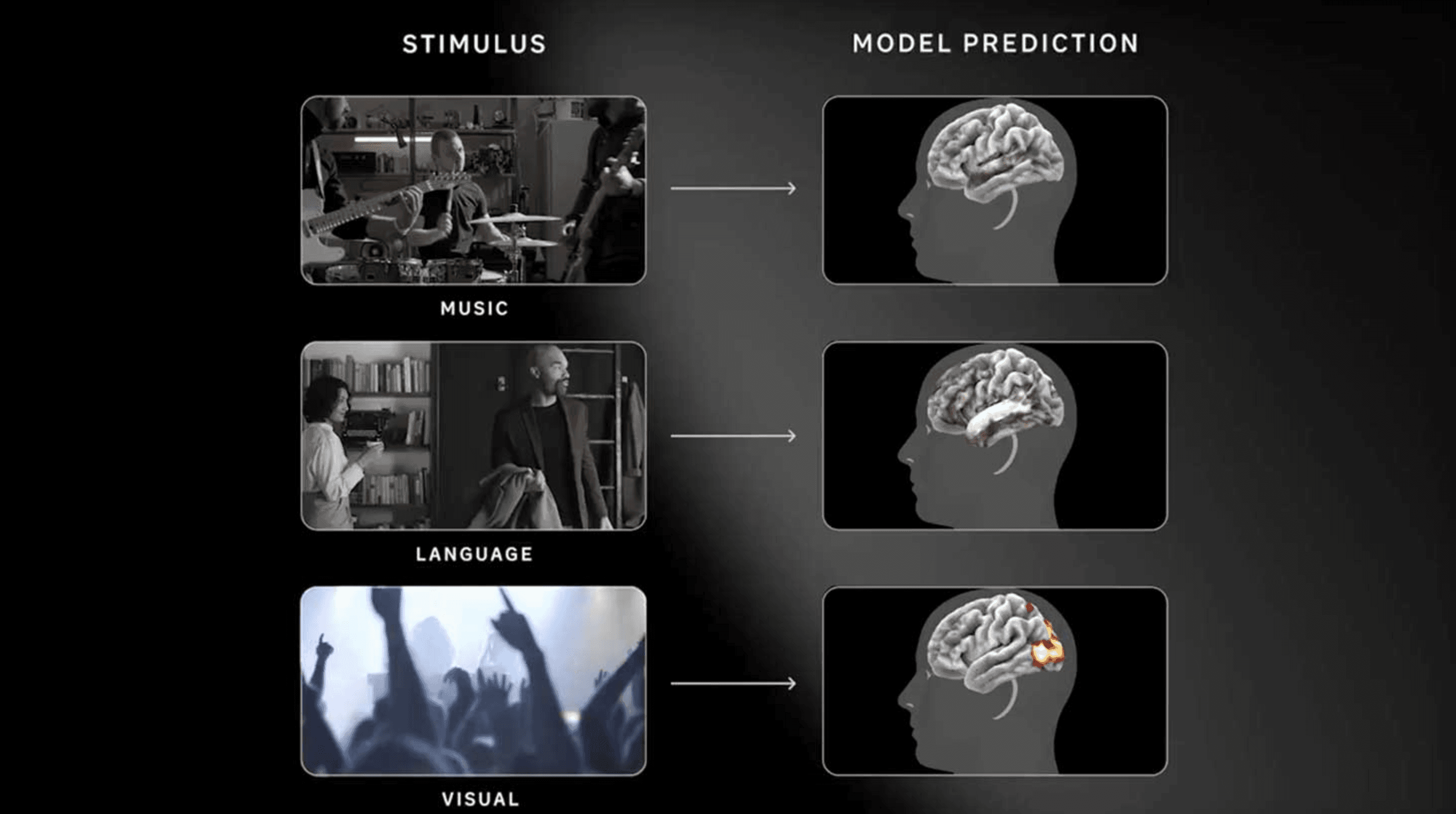
The Cognitive Offloading Interface is one early experiment in that direction, an AI interface designed around the cognitive experience of using it, not only the output it produces. It points at a category of tools that don't yet exist: interfaces that can adapt to the user's mental state, surface when the user is disengaging, slow down when the user is overwhelmed, and treat the conversation as a two-way weighted, cognitive event.
If language models are going to participate in how we think, I wanted the interface to show us when we're thinking with them - and when we've stopped.
Next project
Next project
Next project